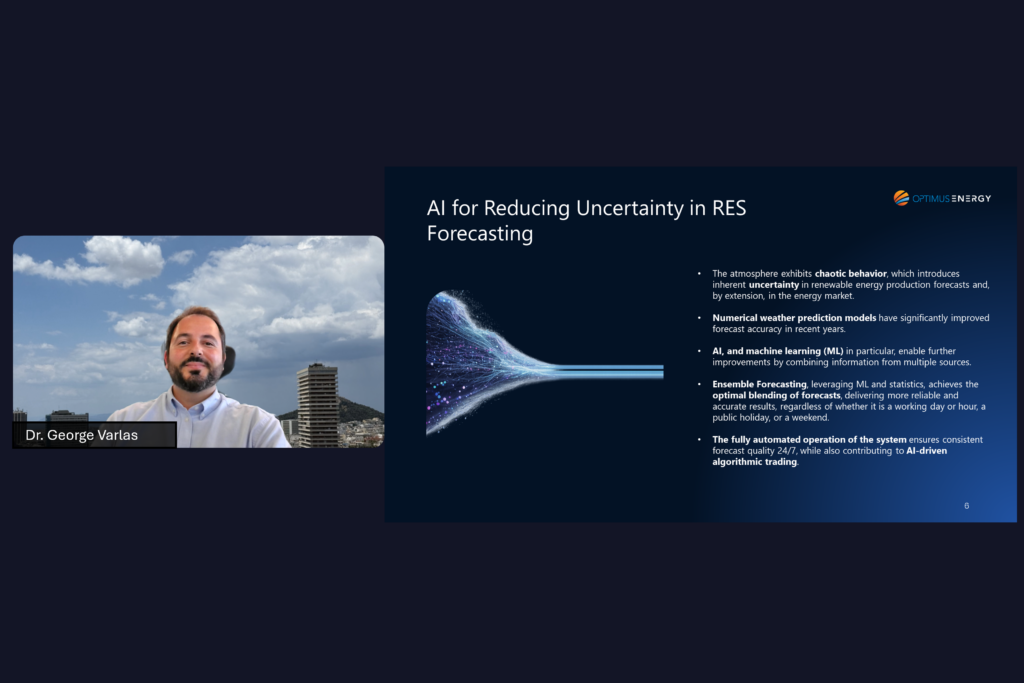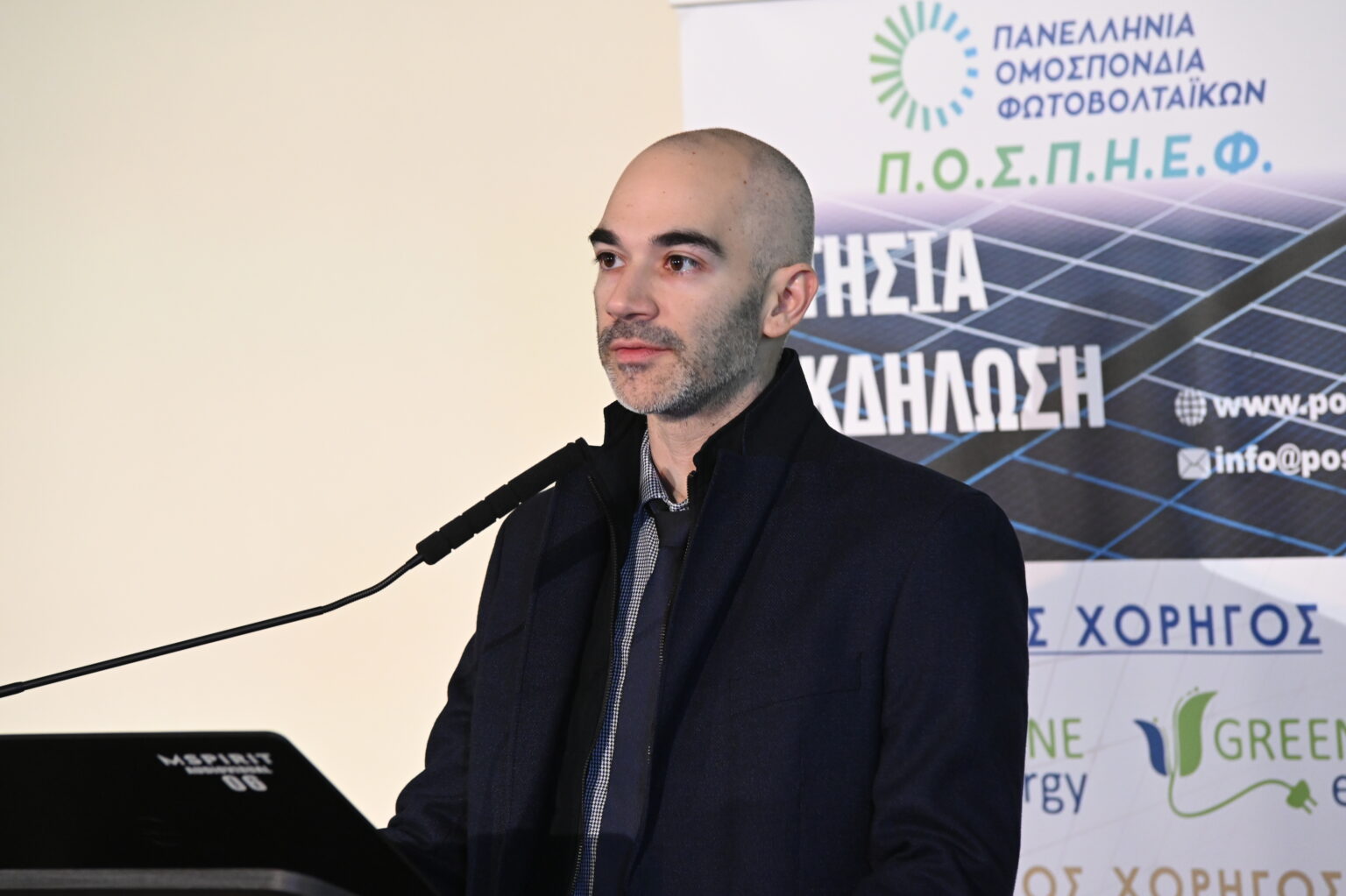
Stelios Vagropoulos, Director of Renewable Energy Sources (RES) at Optimus Energy, participated in the annual conference of the Panhellenic Federation of Photovoltaic Producers Associations (POSPHIEF). During his presentation, he highlighted the rapidly evolving dynamics of the electricity markets, the challenges arising from the intermittent and increasingly surplus generation of renewable energy, and the critical role of advanced forecasting and remote-control solutions in managing large-scale, system-critical RES portfolios, such as Optimus Energy’s portfolio, which now exceeds 4 GW.
Stelios Vagropoulos also presented the proactive measures that Optimus Energy has been implementing for more than a year, encouraging all RES plants represented by the company to connect to its Virtual Power Plant (VPP). This connectivity enables real-time monitoring, control, and optimized portfolio management, particularly during periods of zero or negative electricity prices, helping mitigate risks, improve operational efficiency, and reduce uncontrolled renewable energy curtailments.
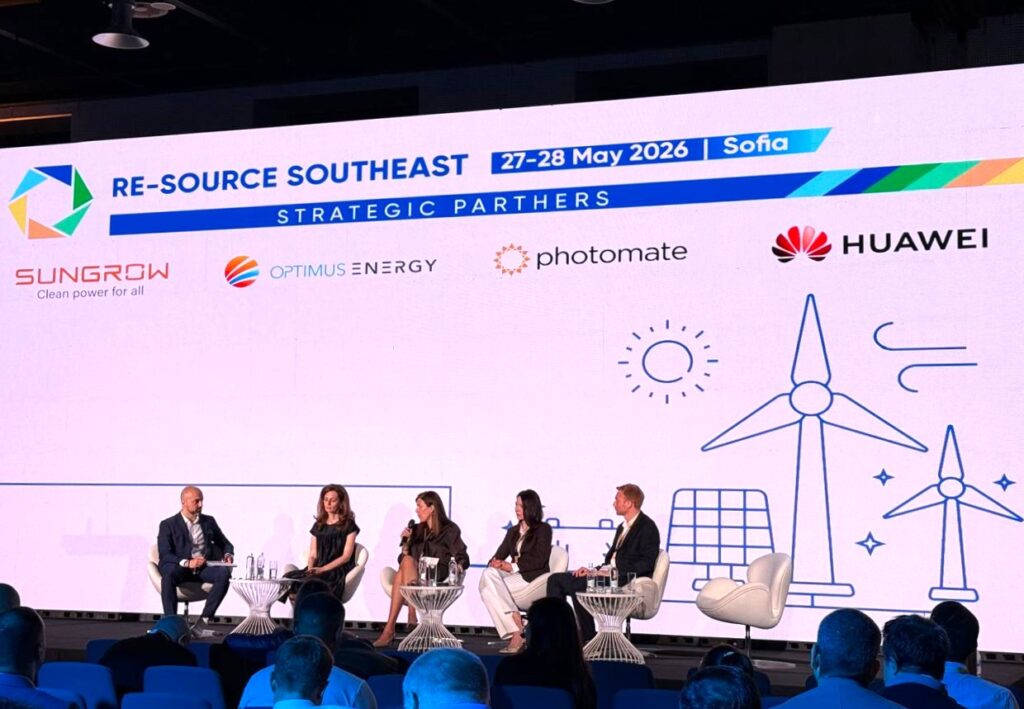
At the same event, Optimus Energy CEO Stella Zacharia participated in a high-level panel discussion moderated by Kostas Deligiannis, alongside representatives from the Regulatory Authority for Waste, Energy and Water (RAAEY), the Independent Power Transmission Operator (IPTO), the Hellenic Electricity Distribution Network Operator (HEDNO), the Renewable Energy Sources Operator & Guarantees of Origin (DAPEEP), and the Ministry of Environment and Energy’s Committee on Energy Storage.
During the discussion, Stella Zacharia highlighted the increasing challenges associated with managing large renewable energy portfolios and emphasized the importance of secure dispatch and close coordination with the system operators. As she noted, Optimus Energy continues to invest in resilient infrastructure and technologies, building a future in which renewable energy producers can operate with confidence by entrusting the management of their assets to a modern, robust, and secure operating platform.
Reflecting on the remarks she made at the same event one year ago, Stella Zacharia noted that energy storage facilities have unfortunately not yet entered commercial operation. As a result, renewable energy curtailments have increased significantly, while periods of zero or even negative electricity prices have become more frequent. At the same time, the continuous integration of new renewable generation further intensifies these market conditions, making zero and negative prices a natural consequence of the growing supply of low-cost renewable energy.
We sincerely thank the organizers for the excellent event and for providing such a valuable forum for dialogue on the future of solar energy and the energy transition in Greece.